Stage Eleven
I counted the grimaces. That was my job, technically. But it was also my entertainment.
Eleven stages. Eleven days of watching twenty-two men try to turn their bodies into carbon-fiber engines. I’d seen everything: the quiet grimace of a hamstring tightening, the open-mouthed gasp of a bonk, the ugly, beautiful contortion of a sprint finish. I knew which rider favored his left hip and which one held his breath when he was tired. I was forty, I was paid to keep them moving, and I was relentlessly, aggressively happy about it.
Except for Carl.
Carl didn’t grimace. He didn’t sigh. He didn’t even blink much. He sat in the driver’s seat of the lead support car, hands at ten and two, eyes scanning the radio frequency and the road ahead with the stillness of a statue carved from granite and caffeine. In eleven days, I had seen him smile exactly once, and that was when he caught a bird pooping on the windshield.
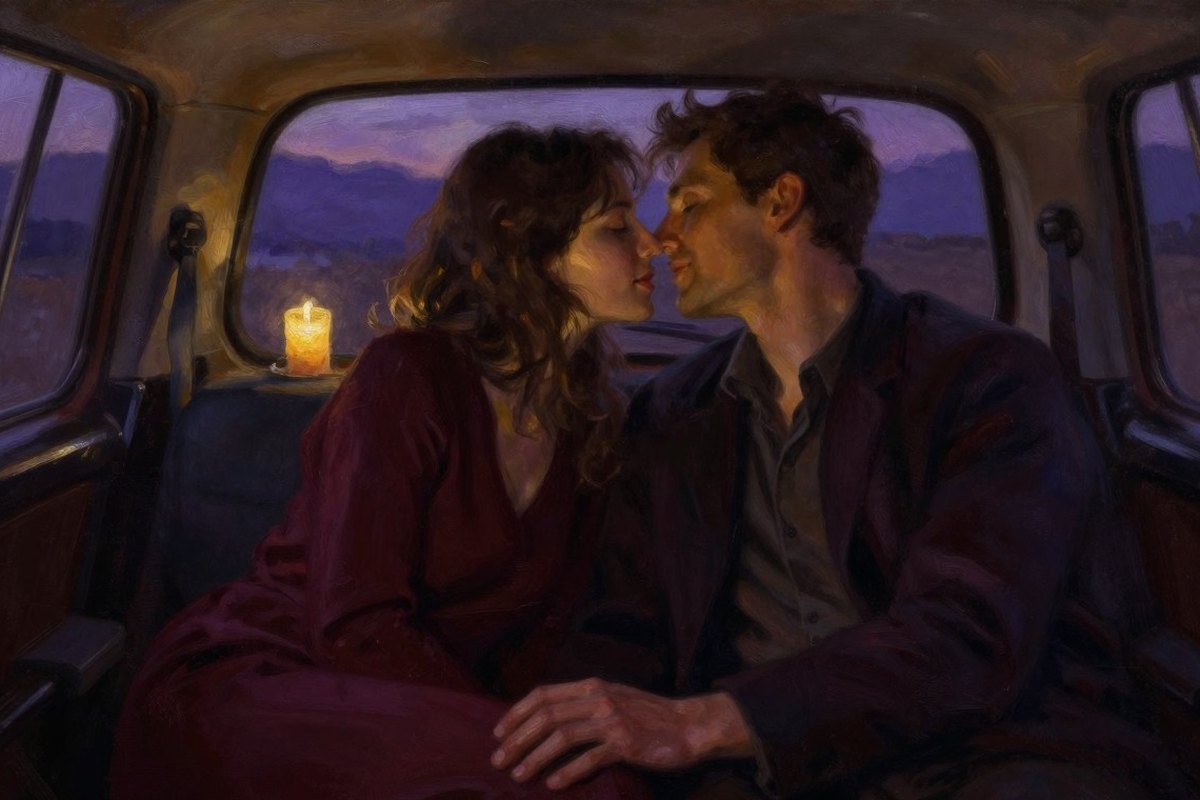
It was now 6:15 PM on the final stage. The sun dipped behind the Pyrenees, turning the abbey courtyard’s cobblestones into a landscape of violet and stone. The team hotel, a converted monastery that smelled faintly of old stone and lavender detergent, loomed ahead. Tomorrow was the rest day. The race was over. We were just two people sitting in a cramped Volvo, surrounded by spare wheels and water bottles.
I turned to look at him. Carl was broad in the shoulders, the kind of width that filled out a t-shirt without trying, though he wore a team polo that strained slightly across the back. His hands were large, the knuckles scarred from decades of fixing bikes and shifting gears, resting lightly on the steering wheel. He had a habit of tapping his thumb against the rim of the wheel when he was thinking, a tiny, rhythmic *tick-tick-tick* that was the only sound he’d made all afternoon.
"You’re doing it again," I said, leaning over the center console. The air in the car was cool, smelling of rubber and his sandalwood soap.
Carl didn’t look at me. His jaw tightened, just a fraction. "Doing what?"
"Nothing. It’s very intimidating. All that silence. Are you saving it for the press conference?"
He glanced at me then. His eyes were dark, tired, and sharp. He didn’t smile. But he didn’t look away, either.
"Get the data tablet, Tracy," he said. His voice was low, rough from disuse. "Before I start counting your reasons for being cheerful."
I grinned. I had plenty of reasons. But right now, the only one that mattered was the way his thumb stopped tapping.
I grabbed the tablet from the seat, my knee bumping his thigh as I squeezed past the stack of spare tubes. The car held the day’s debris: empty energy gel wrappers, sweat-soaked jerseys, and the sharp bite of chain oil. Carl had already opened the laptop balanced on the dashboard, the screen glowing blue in the twilight.
“Alright, let’s see the magic,” I said, my voice bright, cutting through the hum of the idling engine. I turned the tablet toward him. “Look at this. Mateo’s power-to-weight ratio on the final climb. It’s beautiful. Like poetry.
Carl grunted, adjusting the air conditioning vent to point directly at his face. He didn’t look at the tablet. He looked at the numbers. His brow was furrowed deep enough to plant seeds in.
“He dropped three watts in the last kilometer,” Carl said. It wasn’t a question. It was an accusation.
“But he held the line,” I countered, tapping the screen. “He held the line against a guy who eats people for breakfast. That’s a win. That’s a victory. We should celebrate. Do we have champagne? I can order champagne. I know a guy in Pamplona who owes me a favor.”
Carl finally looked up. His eyes were dark circles under tired lids. “We have flat mineral water and a half-eaten energy bar. That’s the celebration.”
“Pessimist,” I said, but I smiled. I leaned in closer, pointing at a spike in the heart-rate graph. “See here? This is where I told him to breathe. He listened. You’re welcome.”
I moved my arm to point at another detail, my thigh pressing firmly against his. The denim of my jeans rubbed against his. He held his ground. He didn’t move. For a second, I felt the heat of him, solid and still, through the fabric.
I kept talking, listing every minor victory, every efficient pedal stroke, every moment I’d adjusted a saddle height before it became a problem. I was relentless. I was sunshine. I was annoying.
Then I saw it. His left hand, resting on the edge of the laptop, trembled. Just a tiny vibration in the knuckles. A microscopic shake that betrayed the exhaustion he refused to voice. He’d been driving for four hours, managing radios, watching twenty men suffer, and calculating splits in his head.
I stopped talking. The cheerfulness didn’t vanish, but it softened. I leaned in, my shoulder brushing his.
“Your hand is shaking, Carl.”
“It’s the caffeine withdrawal,” he said, though his voice was thin. “I missed my third coffee.”
“You missed four,” I said. I reached out, my fingers hovering over his wrist. I didn’t grab him. I just let my fingertips rest on his skin, right where the pulse hammered against the bone. It was fast. Erratic. “You’re vibrating, Carl. If you don’t sit still, you’re going to shake the laptop off the dash.”
He looked at my hand. Then he looked at my face. The air in the car felt thick, heavy with the smell of sweat and old leather. He didn’t pull away. He let my fingers press down, steadying the tremor. The skin under my touch was hot.
“Is it working?” I asked.
“Stop talking,” he said.
Free, no account. You will be asked to confirm you are 18 or over.
Or browse the collection