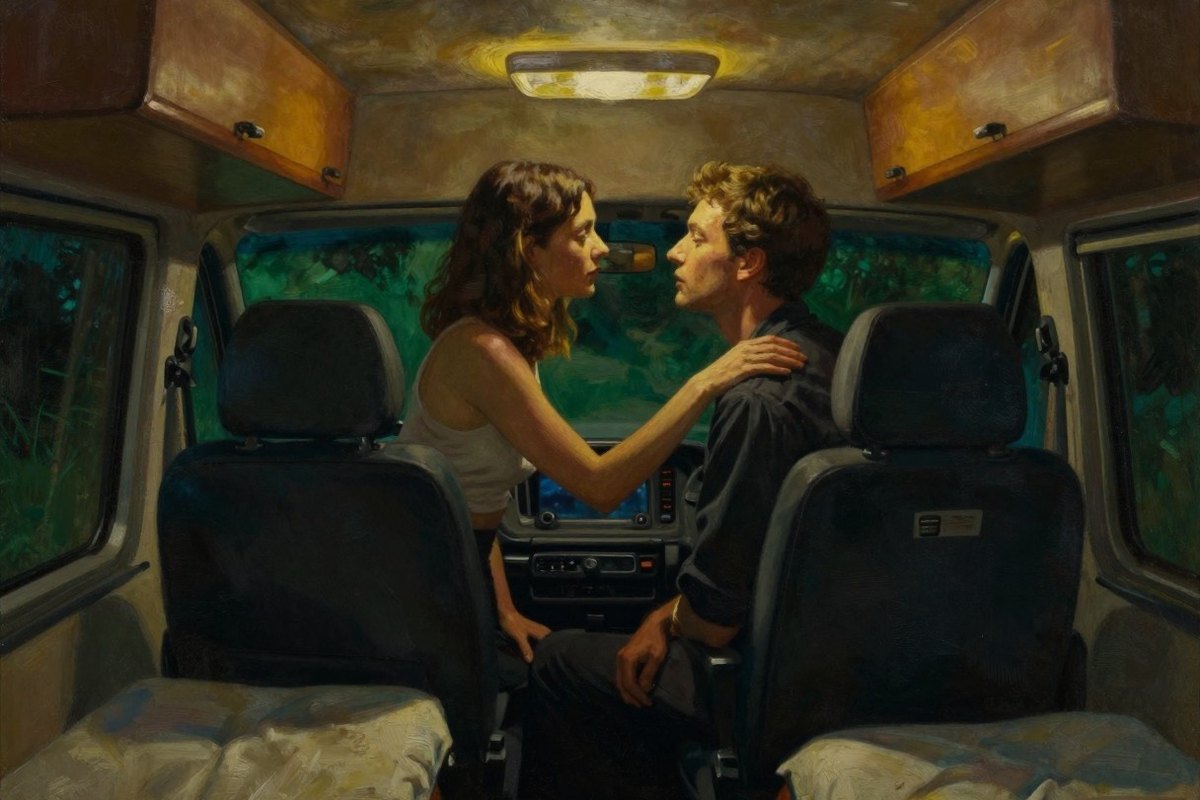
Rain on the Camper Van
Tasha sat on the edge of the narrow mattress in the hired camper van, the metal frame vibrating with the idle hum of the engine. Outside, the Edinburgh rain was drumming a steady, indifferent rhythm against the aluminum siding, washing away the chalk dust of the stage she had just left. Brian was in the driver’s seat, one arm draped over the steering wheel, the other holding a lukewarm lager. He was turning the radio dial, skipping past the static until he found a jazz station, though neither of them was listening.
Ten years of opening sets for her, ten years of riding shotgun through the Scottish Highlands and Lowlands, had condensed into the last forty-eight hours. Tomorrow morning, Brian was in London. A television job, bright lights and green rooms and a schedule that would swallow his weekends. Tasha was staying in Scotland, headlining the rest of the tour, alone in the van, alone on the stages. Tonight was the last night they would share this cramped, diesel-scented space, the last night they were simply Tasha and Brian, friend and friend, before the geography of their lives pulled them apart.
He turned off the radio. The silence that followed was heavy, not with awkwardness, but with the weight of everything they hadn’t said in a decade. He looked at her, really looked at her, his dark eyes reflecting the faint glow of the dashboard. His fingers dug into the leather, gripping the wheel as if it were the only thing anchoring him to the present. He was afraid. She could see it in the tightness of his jaw, the way he refused to meet her gaze for too long.
“I’m scared, Tash,” he said, his voice low. “I’m terrified.”
Tasha took a slow sip of her beer, the cold metal biting her lips, and let the silence stretch until it was just a thing between them, not a wall. She didn’t offer him comfort. She had spent the last hour listening to him dissect her tag on the divorce bit—how she’d held the pause for a full second longer than usual, letting the laughter breathe before the punchline landed. He knew her rhythm better than she did. That was the point of ten years; he was the metronome she couldn’t hear but always felt.
“Terrified is a big word for a Tuesday morning commute, Brian,” she said, her voice dry, scraping against the quiet. “You’re going to sit in a chair and listen to people talk about themselves. You’ll be fine. You’re good at listening.”
He shook his head, a sharp, jerky movement that looked wrong on his usually easy face. “It’s not the commute. It’s the machine. You know how it is. They’ll want a version of me that’s polished. They’ll want the charm without the static. And I’ll give it to them because I’m good at giving people what they want. I’m terrified I’ll forget who I am when I’m not here, bouncing off your sets.”
He finally looked at her then, his eyes wide and unguarded, stripped of the performer’s mask he wore for every crowd he’d ever warmed up. It was a raw, ugly thing to admit, especially for a man who made his living on being likable. He looked like he was waiting for her to laugh, to make a joke about his existential dread to break the tension.
Tasha didn’t laugh. She looked at the condensation on her can, watching a single drop race down the side. She thought about the empty passenger seat for the next six weeks. She thought about the silence in her hotel rooms, the lack of someone who knew exactly how she took her coffee, the absence of the person who had caught her when she fell off the stage in Glasgow three years ago.
“I won’t let you forget,” she said. It wasn’t a pledge; it was a diagnosis. “You’ll be bored, Brian. Not broken. There’s a difference.”
He let out a breath that sounded like a surrender, his shoulders dropping an inch. “Bored is safer than broken.”
“Bored is bearable.” She set the beer down on the dashboard, the glass clinking softly against the plastic. “And you’ll have me. I’ll still be here. You’ll still have the best comedian in Scotland to call when you’re losing your mind.”
“Scotland is a long way to shout at a television,” he said, though the smile was back, thin and familiar. He reached for his own drink, his fingers brushing the cold aluminum. “And you’ll be busy. Headlining. No time for a Londoner’s neuroses.”
She watched his hand. It was steady now, the tremor gone, replaced by the casual grace of a man who had spent a decade making sure no one else spilled a drink or forgot a line. That was the job he had loved, the one he had done so well it had become invisible. Supporting. Always supporting.
“I have time,” she said.
Free, no account. You will be asked to confirm you are 18 or over.
Or browse the collection